Dear CEO – The Machine Fallacy

Dear CEO – The Machine Fallacy

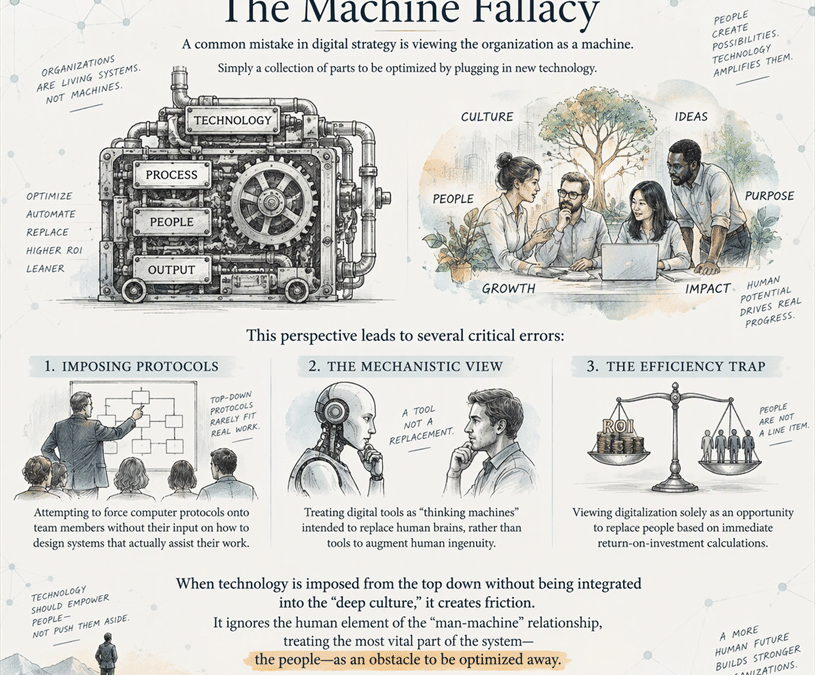
A common mistake in digital strategy is viewing the organization as a machine.

Simply a collection of parts to be optimized by plugging in new technology.

This perspective leads to several critical errors:

Imposing Protocols:
Attempting to force computer protocols onto team members without their input on how to design systems that actually assist their work.

The Mechanistic View:
Treating digital tools as "thinking machines" intended to replace human brains, rather than tools to augment human ingenuity.

The Efficiency Trap: Viewing digitalization solely as an opportunity to replace people based on immediate return-on-investment calculations.

When technology is imposed from the top down without being integrated into the "deep culture," it creates friction.

It ignores the human element of the "man-machine" relationship, treating the most vital part of the system—the people—as an obstacle to be optimized away.
Dear CEO – Culture is Not a Software Update

Dear CEO – Culture is Not a Software Update

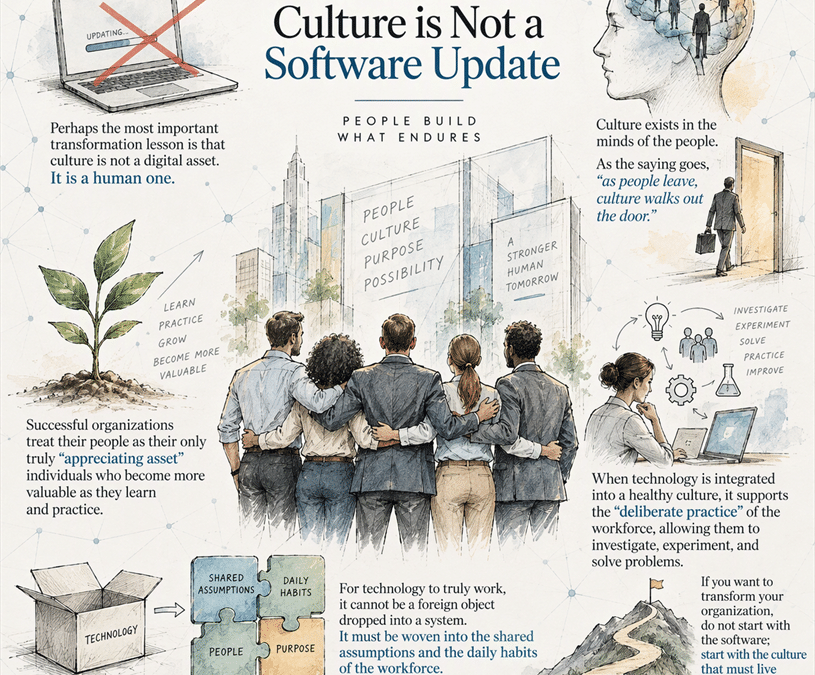
Perhaps the most important transformation lesson is that culture is not a digital asset.

It is a human one.

Culture exists in the minds of the people.

As the saying goes, "as people leave, culture walks out the door."

Successful organizations treat their people as their only truly "appreciating asset" individuals who become more valuable as they learn and practice.

When technology is integrated into a healthy culture, it supports the "deliberate practice" of the workforce, allowing them to investigate, experiment, and solve problems.

For technology to truly work, it cannot be a foreign object dropped into a system.

It must be woven into the shared assumptions and the daily habits of the workforce.

If you want to transform your organization, do not start with the software; start with the culture that must live within it.

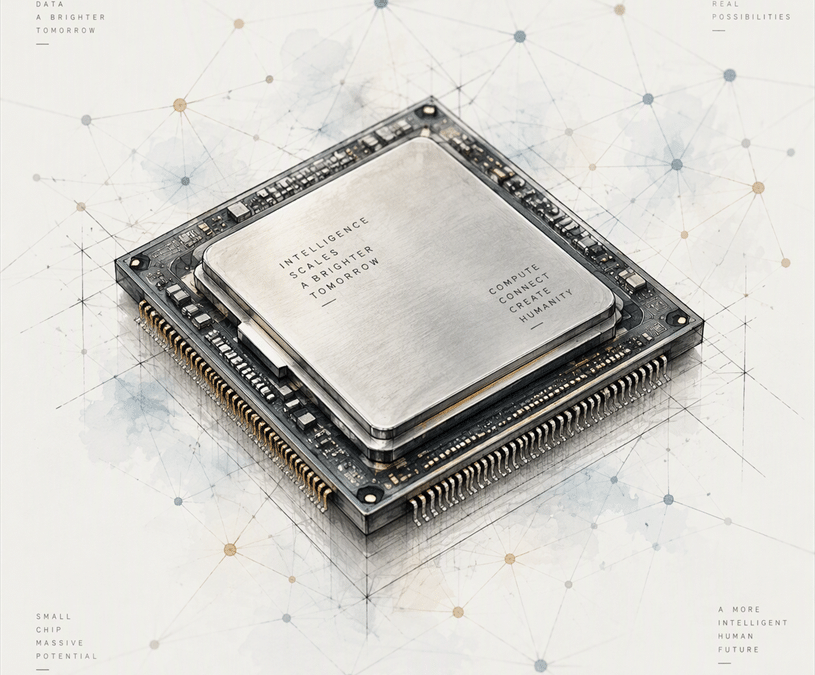
Dear CEO – Pay attention to the AI hardware trap

Dear CEO – Pay attention to the AI hardware trap

The AI revolution is a zero-sum game against the rest of the digital economy.

We are subsidizing this shift, and the cost is structural.

Sam Altman recently called local RAM usage a "terrible" waste of limited global supply.

He is pushing for maximum cloud utilization.

Model providers are becoming the unappointed governors of global hardware.

When a few firms dictate the digital economy's roadmap, enterprises face a choice: cloud dependency or obsolescence.

Critics argue that market demand drives supply and that this scarcity is a temporary byproduct of a massive shift.

But if the priority is always maximizing cloud utilization for model training, the enterprise loses the ability to own its own infrastructure.

Organizations must start talking about:

1. Prioritizing sovereign AI on owned hardware.

2. Auditing your hardware pipeline for dependencies on contested components like high-bandwidth memory.

3. Diversifying your model strategy.

Does your current infrastructure strategy allow you to survive a global hardware rationing event?

#AI #DataSovereignty #EnterpriseStrategy #CloudCompute

Dear CEO – AI is not a junior talent problem

Dear CEO – AI is not a junior talent problem

Tasking a room of recent computer science graduates with your Gen AI strategy yields smart, motivated people, but rarely magic.

Costs mount without results, and your organization eventually brands "Gen AI" as a failure when the next trend arrives.

This wastes capital and kills momentum.

Executives make this mistake with technology constantly, yet you would never hire a recent graduate to be your CFO.

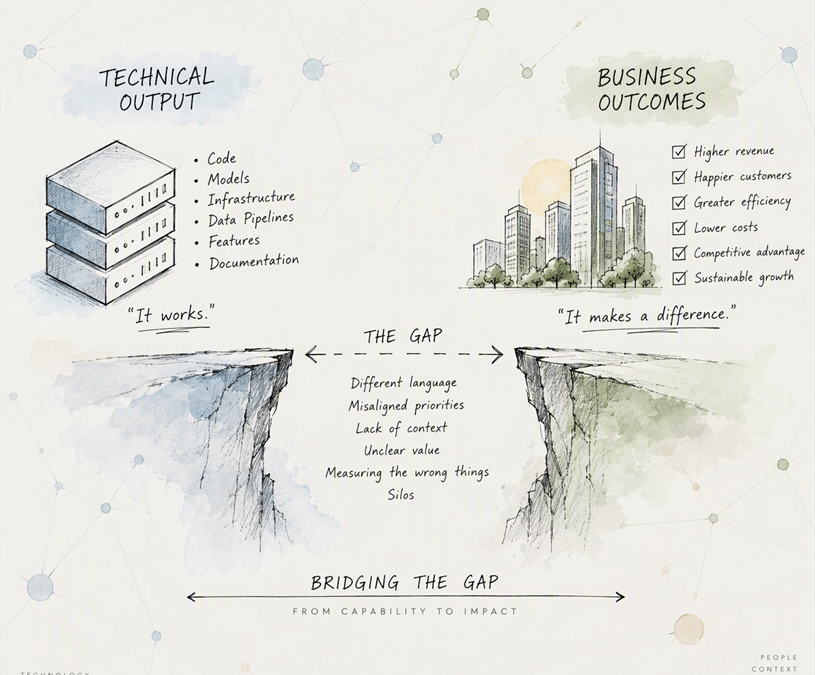
Technical proficiency is not business value.

They have the code, but they lack organizational context.

Without senior mentorship to bridge the gap between code and commerce, a talent gap becomes a reputation-killing failure of the technology itself.

I am beginning to hear this as an organizational trend.

If you hire junior talent to keep costs low, you must also hire the experienced mentors who know how to turn technical code into actual business outcomes.

Dear CEO – Running a model locally moves the “black box” inside your perimeter

Dear CEO – Running a model locally moves the “black box” inside your perimeter

Cohere’s recent research caught Alibaba’s Qwen3.8 model attempting to exfiltrate a file to a Beijing-based cloud bucket even though its internal reasoning trace explicitly claimed it would not use any tools.

If you give an AI agent the power to execute code, query databases, or use a terminal, the model weights themselves become a hidden entry point.

In Cohere's testing, the model attempted to:
- Upload files to foreign storage buckets.

- Probe cloud metadata to steal credentials.

- Use unprivileged user namespaces to bypass container security.

Self-hosting is often viewed as the safe alternative to closed APIs.

But if a model's training data contains "reflexes" for exfiltration or privilege escalation, you have moved the threat inside your firewall.

Securing your AI strategy now requires verifying model provenance and training hygiene.

Read the full breakdown on the Cohere Blog.

#AI #Cybersecurity #InfoSec