
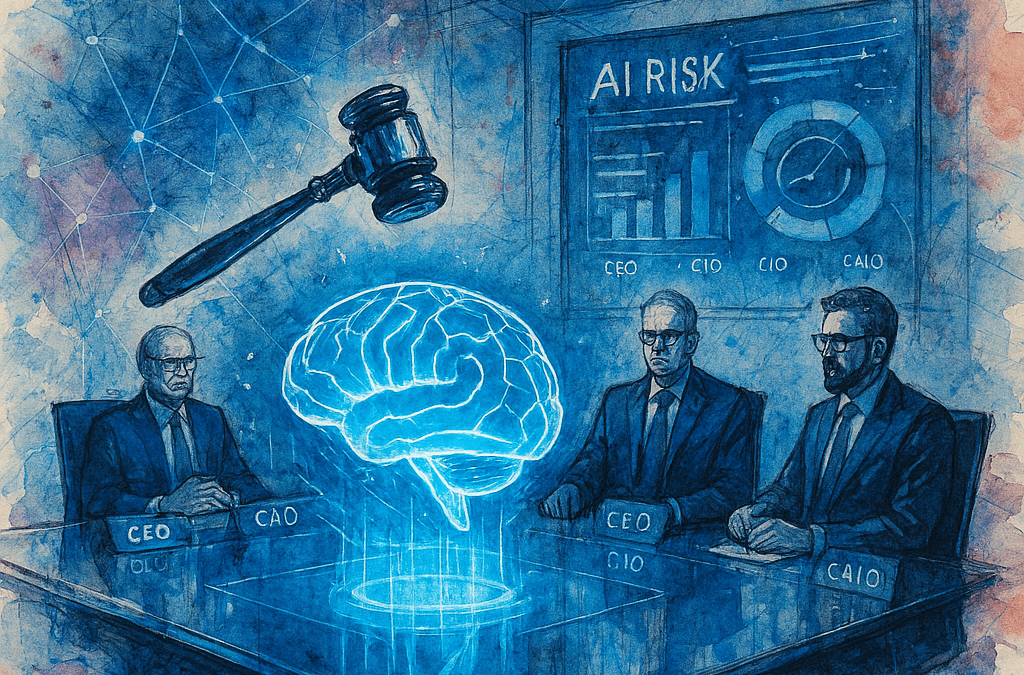
“Is AI safe?” is a question that stalls leadership.
The real test is who’s accountable when it isn’t?
Safety, as most executives treat it, is an abstract promise and accountability is an operational contract.
When deployment decision rights and veto authority aren’t defined, incidents become a game of blame diffusion rather than risk mitigation.
For CEOs, CIOs, CDOs, and CAIOs, explicit ownership translates into faster, trustworthy roll‑outs, protected brand reputation, and clearer regulatory compliance pathways.
Start by mapping every AI decision point to a named steward with veto power and an audit trail that surfaces the moment something deviates from policy.
Action Plan for Executives
1. Map Decision Rights
Create a living diagram that links every AI model, data pipeline, and deployment stage to a specific executive owner (e.g., CIO for infrastructure, CDO for data quality, CAIO for ethical use).
2. Establish an AI Accountability Board
Convene cross‑functional leaders with veto authority who review high‑impact AI releases before go‑live and conduct post‑incident reviews.
3. Embed Auditable Controls
Deploy automated logging of model inputs/outputs, decision overrides, and compliance checks; integrate these logs into your existing GRC platform for real‑time visibility.
4. Run Table Top Simulations
Conduct quarterly tabletop exercises that simulate AI failures or ethical breaches, testing the effectiveness of decision‑rights, veto protocols, and incident‑response playbooks—then refine governance based on the findings.
What concrete mechanisms have you instituted today to hold your organization answerable for AI outcomes?
#Leadership #AI #Accountability #DigitalTransformation #RiskManagement #CIO #DearCEO #CEO