
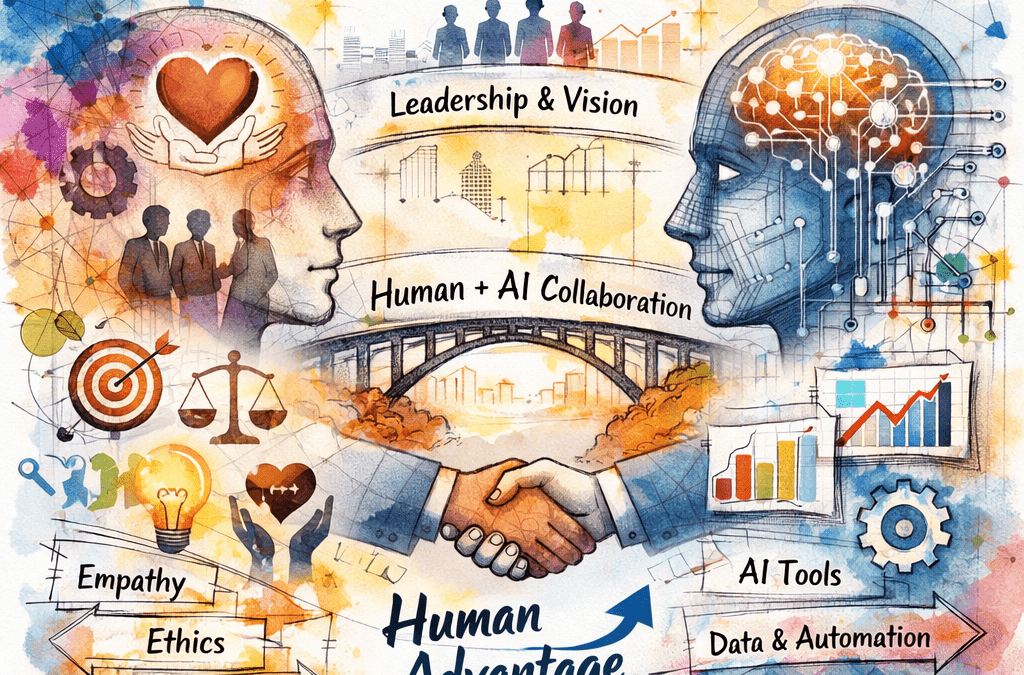
Are you optimizing your processes, or are you optimizing your people?
This is the single most critical question facing every executive leading an organization today.
The narrative around AI often centers on the technology itself—the models, the data pipelines, the speed.
But the true competitive moat no longer resides in the tech stack; it resides in the humanity of your leadership.
Your primary role as an executive is shifting from being the chief operator to the chief architect of human capability.
The most valuable asset AI augments is not the ledger, but the empathy, the ethical judgment, and the visionary thinking of your team.
Leaders must now champion a culture of courageous experimentation, treating AI as an amplifier for human genius, not a replacement for it.
True digital transformation means solving complex problems that require nuance—the things machines cannot yet feel.
This pivot demands that leadership must go first, demonstrating the emotional engagement and commitment to change.
Focus your efforts on defining the "why" and the "how" of human-machine collaboration.
Action Plan for Executives, to operationalize the insights above, executives should implement the following three-pronged plan:
Conduct a "Humanity Audit"
Identify the top three business processes that require deep empathy, ethical judgment, or complex negotiation (areas AI struggles with). These become your immediate focus areas for strategic investment.
Institute "AI-Augmented Empathy Workshops"
Rather than running AI workshops, run workshops designed to teach teams how to pair AI outputs with deep human insight. This forces cross-functional thinking.
Mandate Leadership Modeling
The executive team must publicly and visibly lead the adoption of new AI tools in their own daily workflows. This sets the cultural tone and signals that transformation is non-negotiable.
What is the one non-technical skill your organization must amplify to survive the next wave of AI disruption?