
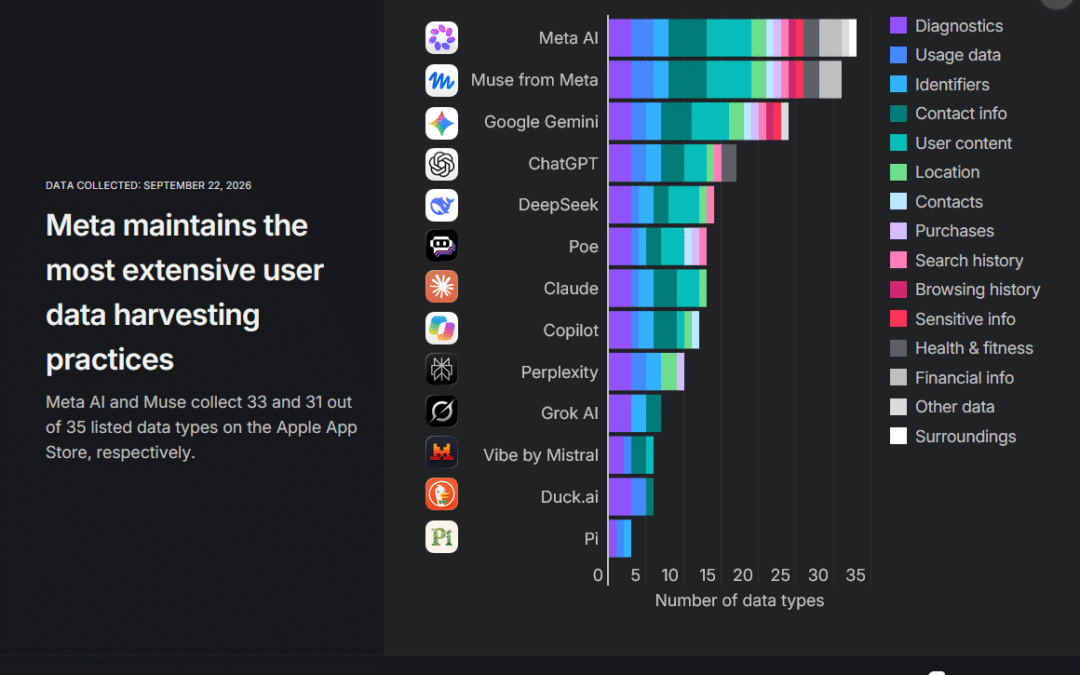
Your employees' AI agents (Meta Muse) are building unauthorized dossiers on your most important clients.
The transition from chatbots to agents is quietly breaking the concept of individual consent.
Reports from WIRED regarding Meta’s Muse agent show that these tools move beyond simple chat to build relational models.
The agent compiles one page profiles on a user's contacts, including family, colleagues, and collaborators.
This is a privacy concern for consumers, but for the enterprise, it is a massive, unquantified legal risk.
When an agent extracts inferred details about a third party, such as their personal habits or relationship history, to provide context to a user, it is generating data on someone who never signed your terms of service.
The risk is real.
One may argue that agents need this context to be useful and that users can simply opt out of sharing.
Opting out of a single app does nothing to address the unauthorized creation of a profile on a person who has no relationship with the app.
You cannot opt out of a dossier that was built using someone else's data.
1. Audit your AI usage to see if employees are feeding client data into agents that create persistent memories.
2. Update your third party risk assessments to account for inferred relational data.
3. Define where permission ends.
Does your current AI governance framework distinguish between a user's own data and the inferred data an agent gathers about their professional network?
Image credit: SurfShark
#AIGovernance #DataPrivacy #AgenticAI #EnterpriseRisk #AICompliance