
Dear CEO – The 27 Year-Old Vulnerability – Is Your Technology Infrastructure Already Compromised

Dear CEO – The 27 Year-Old Vulnerability – Is Your Technology Infrastructure Already Compromised

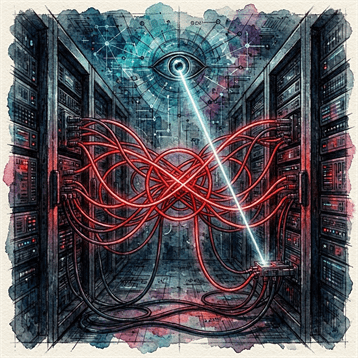
When an AI model discovers 27 year-old vulnerabilities that human engineers missed, it is no longer a tech update.

It is a systemic technology crisis.

The recent emergency summit between Wall Street’s elite and U.S. Treasury officials underscores a chilling reality.

Frontier models like Anthropic’s "Mythos" are redefining the boundaries of cyber warfare.

As these capabilities proliferate, the widespread lack of robust cybersecurity controls within organizations is about to become an existential liability.

Let that sink in for a moment, cyber attacks on your business are about to exponentially explore.

We are shifting from an era of manual patching to one of hyper-accelerated, AI-driven offense that can bypass decades of established security protocols.

For the C-Suite, the mandate is clear: the gap between AI capability and traditional defense is widening into a chasm.

Strategic Action Plan for Executives

Audit Legacy Debt
Initiate an immediate deep-scan of "legacy" infrastructure. If an AI can find 27 year-old flaws in supposedly secure systems like OpenBSD, your older, unmonitored assets are your greatest exposure.

Shift to Proactive Defense
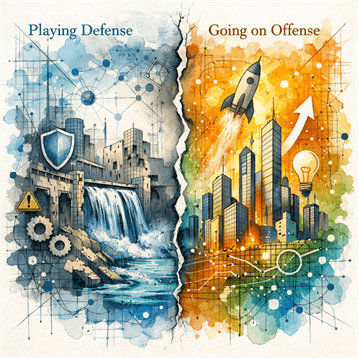
Move away from reactive security. Evaluate participation in industry-wide intelligence-sharing consortiums to leverage AI-driven defensive tools before they are weaponized by bad actors.

Redefine the AI Governance Framework
Update your AI procurement and usage policies. Ensure that "AI-readiness" includes a rigorous assessment of how new models impact your specific attack surface.

Stress Test Control Environments
Strengthen internal cybersecurity controls specifically against "automated exploitation." If your current controls rely on human-speed detection, they are already obsolete.

Is your organization prepared for a world where the most dangerous threats are the ones you didn't even know existed?

#CyberSecurity #AI #DigitalTransformation #RiskManagement #Leadership #GenerativeAI #DearCEO #CEO

Dear CEO – The AI Roadmap Illusion – Why Your Strategy is Stuck in Performative Alignment

Dear CEO – The AI Roadmap Illusion – Why Your Strategy is Stuck in Performative Alignment

Everyone in your boardroom knows your AI roadmap is a fantasy.

They’re just waiting for someone else to say it first.

Right now, your strategy likely looks like a sprawling list of 14 initiatives, multiple platforms, and a massive cloud migration, all lacking clear ownership or realistic timelines.

For many executives, the AI roadmap has become a political artifact.

A document designed to satisfy board inquiries rather than drive actual delivery.

This creates a dangerous culture of "performative alignment," where leadership nods in agreement during meetings while privately knowing execution will never start.

The most effective leaders are breaking this pattern by embracing ruthless simplification.

They are stripping the roadmap down to its bare essentials.

Identifying three high-impact initiatives, assigning each to a named executive owner, and setting non-negotiable deadlines.

By moving from "AI theater" to radical accountability, you stop wasting capital on vanity projects and start building actual enterprise value.

The goal isn't to have the most ambitious plan; it is to have the most executable one.

The Executive Action Plan:
1. The Audit:
Review your current AI roadmap and highlight every initiative that does not have a single, named executive owner.

2. The Pruning:
Categorically eliminate any project that lacks a clear connection to immediate ROI or core business KPIs.

3. The Reset:
Re-publish a "Minimum Viable Roadmap" containing no more than three high-priority items, each with a hard delivery date and an accountable lead.

Are you building a strategy to impress your board, or one that is actually built to ship?

#Leadership #AIStrategy #DigitalTransformation #CEO #ExecutiveExecution #Innovation #DearCEO #CEO

Dear CEO – Stop Chasing the AI Hype – Start Chasing the ROI

Dear CEO – Stop Chasing the AI Hype – Start Chasing the ROI

If you are only looking for "magical" AI use cases, you are likely leaving massive margins on the table.

The era of chasing flashy, experimental Gen AI pilots is giving way to a much more disciplined reality.

High-impact AI isn't found in creative breakthroughs.

It lives in your most "boring" repetitive workflows.

These mundane processes such as data reconciliation, invoice processing, or scheduling these offer the clearest baseline metrics for success.

Because these tasks have established cost and time benchmarks, any improvement is immediately quantifiable.

Furthermore, automating "boring" tasks reduces adoption friction because the value proposition to your workforce is undeniable.

For the C-suite, this represents a strategic shift from speculative innovation to measurable operational excellence.

By focusing on high frequency, low complexity automation, you secure the quick wins necessary to fund much larger digital transformations.

Stop hunting for the "wow" factor and start hunting for the friction.

The Executive Action Plan
1. Audit the Mundane
Identify high-frequency, manual workflows within your operations that currently lack clear KPIs.

2. Establish the Baseline
Document the exact time and cost expenditure of these processes today.

3. Targeted Deployment
Deploy narrow AI solutions specifically designed to bridge the delta between current costs and automated efficiency.

Are you prioritizing AI for its "wow" factor, or for its measurable impact on your bottom line?

#AIStrategy #DigitalTransformation #OperationalExcellence #CIO #DearCEO #ROI #CEO

Dear CEO – The 40-Year Warning – Why Your Mid-Career Talent is at Greater Risk than Gen Z to AI Transformation

Dear CEO – The 40-Year Warning – Why Your Mid-Career Talent is at Greater Risk than Gen Z to AI Transformation

Goldman Sachs economists just completed a massive, 40-year longitudinal study of over 20,000 individuals, and the findings are a wake-up call for the C-Suite.

Their research reveals a profound "scarring" effect.

Workers displaced by technology face a decade of suppressed earnings growth nearly 10 percentage points lower than their never displaced peers.

While the media focuses on Gen Z, the data proves that younger, highly mobile, and college-educated workers are actually best equipped to pivot into analytical, AI-complementary roles.

The true strategic vulnerability lies in your mid-career specialists whose deep, occupation-specific skills are most susceptible to "occupational downgrading" during automation waves.

For leaders, the mission is clear.

We must move beyond mere automation and focus on engineering "upward mobility" for our most stable yet most at risk talent.

The Executive Action Plan Preventing Talent Scarring

1. Audit for "Skill Rigidity"
Use your current transformation roadmap to identify departments where roles are heavily reliant on routine tasks and lack analytical depth. These are your high-risk zones for long-term talent decay.

2. Prioritize "Upward Migration" Tracks
Instead of traditional severance or replacement, design internal pathways that transition displaced workers into higher-value, AI-augmented roles (e.g., moving from manual auditing to exception-based oversight).

3. Institutionalize Rapid Reskilling
The data shows a clear dividend for technical retraining. Implement short-burst, high-impact vocational programs specifically designed to move employees from "routine" to "analytical" competencies within 36 months of displacement.

4. De-risk the Recession Cycle
Since economic downturns amplify displacement damage, build a "resilience buffer" by using periods of stability to upskill your most specialized (and therefore most vulnerable) cohorts before the next market contraction.

Are you investing in AI to replace headcount, or to re-architect your human capital for the next decade?

#AIStrategy #WorkforcePlanning #GoldmanSachs #DigitalTransformation #Leadership #FutureOfWork #DearCEO #CEO

Dear CEO – Beyond the AI Grid – Reimagining Value Propositions in the Knowledge Era

Dear CEO – Beyond the AI Grid – Reimagining Value Propositions in the Knowledge Era

We’re all focused on building the AI grid, but the real opportunity lies in what we build on it.

Just as electricity unlocked a wave of transformative products such as toasters, washing machines – by automating tedious tasks, the AI grid is poised to do the same for the knowledge era.

But this isn't just about automating existing workflows; it’s about fundamentally rethinking our value propositions.

We need to identify the slow, repetitive, and mundane knowledge tasks that consume our teams' time and attention, and then engineer AI-powered solutions that eliminate them.

This shift demands a strategic re-evaluation of how we create value by moving beyond incremental improvements to envision entirely new services and product offerings built on the foundation of automated expertise.

Just as the industrial revolution was defined by the elimination of manual labor, the digital era, powered by AI, will be defined by the elimination of slow, repetitive, and mundane knowledge labour.

Are you challenging your teams to identify these knowledge bottlenecks and architect solutions that truly redefine your business’s core value?

Let’s discuss how your organization is reimagining its value proposition for the AI-powered future.

#AIStrategy #ValueProposition #DigitalTransformation #KnowledgeWork #Innovation #FutureofWork #DearCEO #CEO

Dear CEO – Stop Building AI Workflows – Start Engineering Human Advantage

Dear CEO – Stop Building AI Workflows – Start Engineering Human Advantage

Are you optimizing your processes, or are you optimizing your people?

This is the single most critical question facing every executive leading an organization today.

The narrative around AI often centers on the technology itself—the models, the data pipelines, the speed.

But the true competitive moat no longer resides in the tech stack; it resides in the humanity of your leadership.

Your primary role as an executive is shifting from being the chief operator to the chief architect of human capability.

The most valuable asset AI augments is not the ledger, but the empathy, the ethical judgment, and the visionary thinking of your team.

Leaders must now champion a culture of courageous experimentation, treating AI as an amplifier for human genius, not a replacement for it.

True digital transformation means solving complex problems that require nuance—the things machines cannot yet feel.

This pivot demands that leadership must go first, demonstrating the emotional engagement and commitment to change.

Focus your efforts on defining the "why" and the "how" of human-machine collaboration.

Action Plan for Executives, to operationalize the insights above, executives should implement the following three-pronged plan:

Conduct a "Humanity Audit"
Identify the top three business processes that require deep empathy, ethical judgment, or complex negotiation (areas AI struggles with). These become your immediate focus areas for strategic investment.

Institute "AI-Augmented Empathy Workshops"
Rather than running AI workshops, run workshops designed to teach teams how to pair AI outputs with deep human insight. This forces cross-functional thinking.

Mandate Leadership Modeling
The executive team must publicly and visibly lead the adoption of new AI tools in their own daily workflows. This sets the cultural tone and signals that transformation is non-negotiable.

What is the one non-technical skill your organization must amplify to survive the next wave of AI disruption?