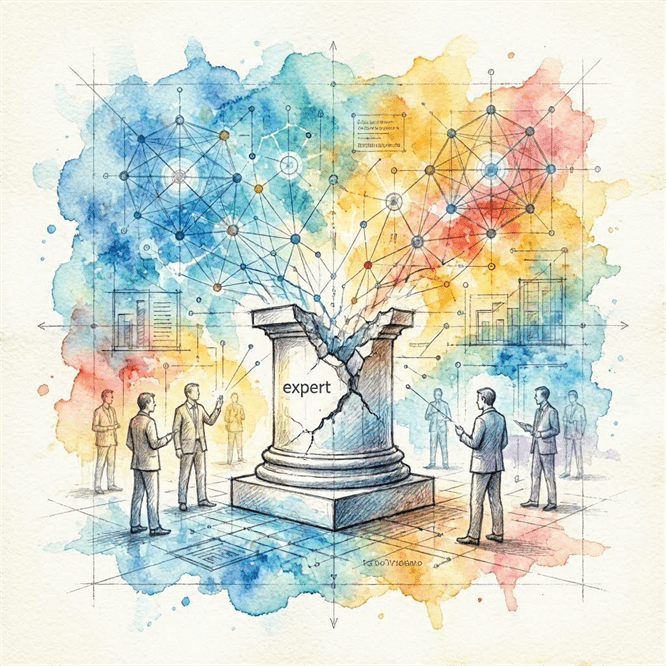

Dear CEO – From AI Buzzwords to Business Engine – Why CEOs Must Make Tech the New Operating System

Dear CEO – From AI Buzzwords to Business Engine – Why CEOs Must Make Tech the New Operating System

If you still think technology is a nice‑to‑have add‑on, you’re already running on an obsolete operating system.

AI, data, and cloud are no longer buzzwords—they are the core infrastructure that powers every strategic decision.

Tech is the digital Operating System
Just as a company’s ERP or finance platform underpins daily operations, a unified tech stack (data lake, model registry, API marketplace) becomes the digital nervous system of the enterprise.

All products, services, and customer interactions draw power from it.

Leadership as Enabler
CEOs who elevate technology to a board‑level agenda set the tone for budget allocation, KPI design, and cultural adoption. When the C‑suite owns the tech roadmap, every department follows suit.

Why It Matters:
Speed & Agility – Decisions shift from quarterly deliberations to real‑time insights, compressing time‑to‑value by up to 40 %.

Competitive Moat – A shared data and AI platform creates economies of scale that rivals cannot replicate quickly.

Talent Magnetism – Top engineers and data scientists flock to organizations where tech is a strategic priority, not an afterthought.

How to Turn Tech into Your Business Engine (5‑Step Playbook)

Step 1 - Declare a Tech‑First Vision
Publish a one‑sentence statement (“Technology is the operating system of our growth”) and embed it in the corporate mission.
Step 2 - Integrate Tech into the Board Agenda
Add “Tech Impact” (model accuracy, AI ROI, data quality) to every board meeting agenda and scorecard.

Step 3 Align Budget & KPIs
Allocate a protected % of EBITDA to platform development; tie executive bonuses to tech‑driven revenue uplift and cost reduction.

Step 4 - Build the Core Platform Layer
Deploy a cloud‑native data lake, model registry, and API marketplace that all business units can consume.

Step 5 - Cultivate a Tech‑Centric Culture
Launch an internal “Tech Champions” program; celebrate AI wins in all‑hands meetings to reinforce the narrative.

If you had to pick one business function to run on this new operating system today—product development, supply chain, or customer experience—which would you choose?

Drop your answer below and let’s start building the engine that will drive tomorrow’s growth.

#Leadership #DigitalTransformation #AI #TechStrategy #CIO #CDO #Innovation #FutureOfWork #BusinessEngine #GrowthMindset #DearCEO #CEO

Dear CEO – Is AI Eroding Developer Skills & Job Satisfaction? A Look Inside Anthropic’s Own Experiment

Dear CEO – Is AI Eroding Developer Skills & Job Satisfaction? A Look Inside Anthropic’s Own Experiment

A fascinating, and potentially unsettling, new study from Anthropic reveals a complex reality about AI's impact on the workforce.

While their engineers are leveraging Claude to boost productivity and automating up to 60% of tasks and enabling work that previously wouldn't have happened.

Their concerns are emerging around deskilling, a loss of core competencies, and a diminished sense of professional fulfillment.

The data shows a trade-off: increased output at the potential cost of long-term expertise and job satisfaction.

Are we rushing into AI adoption without fully understanding the human cost?

It’s a critical moment for leaders to prioritize upskilling, foster a culture of continuous learning, and ensure AI augmentation, not replacement, remains the guiding principle. What safeguards are you implementing to mitigate these risks?

#AI #FutureofWork #DeveloperSkills #Deskilling #Leadership #DigitalTransformation #CEO #DearCEO

Dear CEO – AI vs Executive Reality – The Battle Your Company Can’t Afford to Lose

Dear CEO – AI vs Executive Reality – The Battle Your Company Can’t Afford to Lose

Many organizations say they want to be data-driven, yet their own executives quietly bury the very initiatives that would make it possible.

It’s a silent killer of progress.

We see it every day in our consulting work.

The promise of AI and data-driven decision-making often crashes into executive resistance, leaving brilliant work and wasted potential behind.

Here’s a story that illustrates this perfectly.

A cautionary tale of strong intentions, smart data science, and a fatal lack of buy-in.

I call it the “The Executive Kill Switch”.

In my last corporate role, I had a mandate to digitize and automate the business and help it become data-driven.

We built a strategy, secured funding, and got to work.

Every month the executive team battled a long list of operational issues.

And every executive meeting stalled on the same topic: overdue account receivables.

We proposed a machine learning model to predict which invoices would go overdue.

Our data scientist built it in six weeks with 85% accuracy (iteration 1).

We wrapped it in a simple Power BI dashboard that let leaders instantly see which invoices carried the highest risk.

We brought the model, dashboard, and new business workflow to the executive table.

And it flopped. Badly.

Why?

Because the executive team wasn’t digitally savvy.

They couldn’t see the value.

Yet the solution was built to save time, reduced write-offs, create value based outcomes and would mean we could stop acting as our clients’ bank.

In a true data-driven culture, this would’ve been embraced and operationalized immediately.

The irony is harsh: an executive team paralyzed by a recurring problem rejected the solution engineered to eliminate it.

This isn’t about technology; it’s about leadership and the gap between ambition and behavior.

What executives must start doing:

1. Data Literacy Bootcamp
Mandatory training on data fundamentals and AI applications. Non-negotiable.

2. Executive Data Champions
Empower leaders who genuinely support data initiatives.

3. Focus on Outcomes, Not Jargon
Frame solutions in terms of revenue, savings, and risk reduction.

4. Create a Safe Space for Failure
Encourage experimentation and recognize that setbacks are part of the journey.

Which camp is your organization in?

The innovators harnessing data, or the unwitting architects of its graveyard?

#DataDriven #Leadership #Innovation #AI #ExecutiveBuyIn #DataLiteracy #BusinessTransformation #DearCEO #CEO

Dear CEO – Boardroom Power‑Up – Should You Invite an Outside Tech Executive

Dear CEO – Boardroom Power‑Up – Should You Invite an Outside Tech Executive

If you think the board can survive without a dedicated technology voice, you’re already risking strategic blind spots. Paul Cuatrecasas shows that adding an external tech executive to the board can be a game‑changer if done right.

Pros of Adding an External Technology Executive:

Benefit Why It Matters
Fresh Strategic Perspective – Brings up‑to‑date knowledge on AI, cloud, and emerging platforms that internal directors may lack. Turns “tech hype” into actionable insight.
Accelerated Decision Speed – A tech‑savvy board member can cut the translation time between data scientists and senior leadership, shrinking product‑to‑market cycles from months to weeks. Directly ties to the time‑to‑value compression Cuatrecasas highlights.
Network & Talent Magnetism – Their industry connections help attract top AI talent and forge strategic partnerships faster than a purely internal search. Builds a competitive moat through ecosystem access.
Governance & Risk Oversight – Experienced in AI ethics, bias detection, and regulatory compliance, they can embed governance early, protecting brand equity. Reduces the hidden cost of non‑compliance.

Cons / Risks to Watch:

Risk Mitigation
Potential Conflict with CIO / CAIO – Overlap in responsibilities may create turf battles. Clearly define scope: board member advises on strategy; CIO / CAIO executes.
Cultural Fit – An outsider may clash with existing board dynamics or corporate values. Conduct a cultural‑fit interview and start with an advisory (non‑voting) role before full appointment.
Cost & Compensation – High‑profile tech execs command significant fees. Tie compensation to measurable AI KPI outcomes (e.g., revenue uplift, risk reduction).
Information Leakage – Sensitive data could be exposed if confidentiality isn’t enforced. Require NDAs and strict data‑access controls; limit exposure to strategic rather than operational details.

How to Make It Work (5‑Step Playbook):

Step Action Owner
Define the Role Clearly Draft a charter that outlines strategic focus (AI roadmap, digital governance) and limits operational overlap. CEO & Board Chair
Select the Right Candidate Look for an executive with proven AI‑first leadership, board experience, and cultural alignment. NED Search Committee
Integrate Into Existing Governance Add the tech exec to the Technology & Innovation sub‑committee; ensure they sit alongside CIO/CAIO on quarterly reviews. Board Secretary
Tie Compensation to Impact Link a portion of fees to board‑level AI KPIs (e.g., % of projects delivering ROI, compliance audit scores). CFO
Measure Success Quarterly Track: Strategic Insight Frequency (how many tech‑driven decisions per quarter), Decision Speed Improvement, and Risk Mitigation Metrics. Report these in board minutes. CHRO / CDO

If you could add one external voice to your board tomorrow such as AI strategy, cybersecurity, or digital ecosystems which would give you the biggest competitive edge?

Let’s discuss how that single addition can shift the entire trajectory of your organization.

#Leadership #Boardroom #AI #DigitalTransformation #CIO #CAIO #TechExecutive #Innovation #FutureOfWork #StrategicGovernance #CEO #DearCEO

Dear CEO – The AI Trust Deficit – Is Your HR Department Prepared

Dear CEO – The AI Trust Deficit – Is Your HR Department Prepared

Corporate Generative AI investment is exploding, yet a staggering 31% of workers fear job displacement and only 46% trust AI systems.

This "AI trust deficit" isn't a tech problem it's an HR leadership challenge.

Is it time that HR must reinvent itself, developing "AI fluency" and creating safe spaces for experimentation to bridge this gap?

Successful HR departments are acting as internal testbeds, solving employee problems (automating paperwork, streamlining tasks) to demonstrate AI's value, rather than simply pushing adoption.

Are your CHROs leading with solutions, fostering peer-to-peer learning, and fundamentally rethinking HR technology to meet the speed of the AI era?

The stakes are high and lagging behind isn't an option.

#AI #Leadership #HR #DigitalTransformation #EmployeeExperience #DearCEO #CEO

Dear CEO – Are You Ready for the AI Competency Test

Dear CEO – Are You Ready for the AI Competency Test

The message from the C-suite is clear: AI fluency isn't optional anymore; it's a core competency.

Companies like Accenture are actively "exiting" employees resistant to reskilling, while others are implementing mandatory AI usage mandates and ranking performance based on AI adoption.

This isn't just about learning new tools; it's a fundamental shift in how work is structured and valued, demanding a culture of continuous learning and a willingness to experiment—even at the executive level.

The data reveals a critical risk: organizations failing to embrace this transformation face obsolescence, while those who strategically integrate AI see increased efficiency and talent leverage.

Are you proactively assessing your workforce’s "AI will" or their willingness to adapt or are you risking a talent exodus and competitive disadvantage?

It’s time to move beyond pilot programs and ask: How do we build an organization where AI empowers everyone, not just a few?

#AILeadership #DigitalTransformation #FutureofWork #TalentManagement #AIStrategy #ExecutiveInsights #DearCEO #CEO