
Dear CEO – Stop Guessing Why Your AI Transformation is Stuck. The Readiness Gap Is the Killer

Dear CEO – Stop Guessing Why Your AI Transformation is Stuck. The Readiness Gap Is the Killer

Is your organization confident it's ready for AI, agility, or hyper-growth?

If you are trying to jump into transformation without knowing your starting point, you are playing guessing games and losing valuable time and budget.

The reality is, modern transformation is not a single switch.

It is a complex journey measured across multiple dimensions.

We have found that the biggest roadblock is not technology.

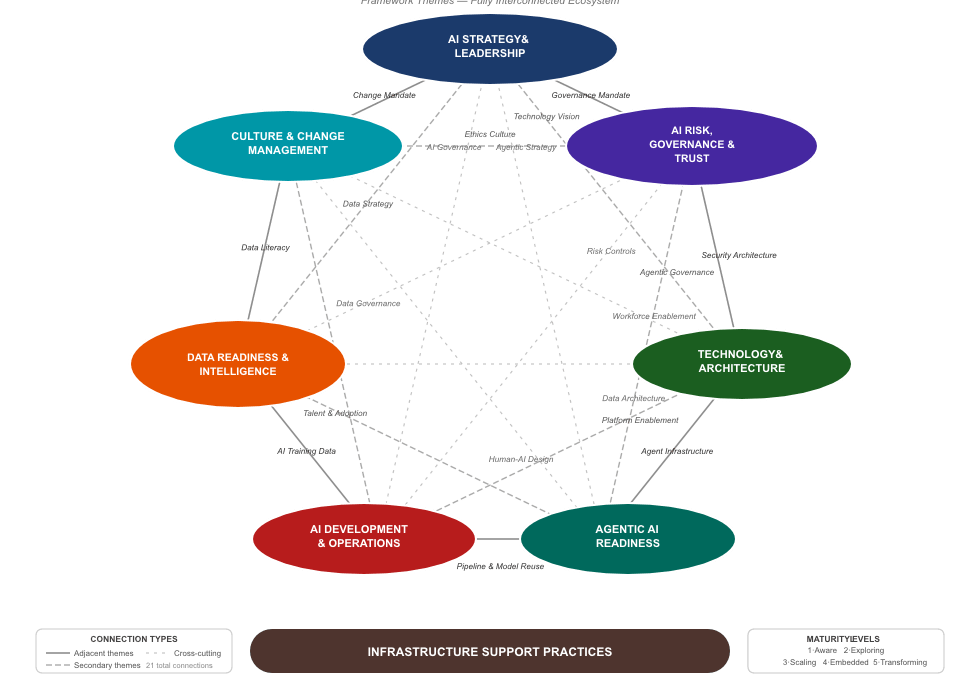
It is often organizational readiness, and this assessment typically spans 8 critical dimensions.

That is where we step in.

We have developed the Generative AI Model (GAIM), and it fundamentally changes how organizations view their maturity.

Inspired by the rigor of models like CMMI Data Management Maturity (DMM), GAIM allows you to:

Pinpoint Your Reality:
Instantly understand your current maturity level using a robust 5-point scale across those 8 dimensions.

Visualize the Future:
See precisely what the "next level" looks like, allowing you to build a crystal clear maturity roadmap.

Actionable Growth:
Move beyond vague goals and identify the specific attributes and steps required to bridge your current state to your desired future state.

GAIM doesn't just grade you.

It gives you the GPS for your journey into true organizational excellence.

Ready to move from hoping to knowing?

Let’s map your maturity journey.

#DigitalTransformation #AIreadiness #GenerativeAI #OrganizationalMaturity #GAIM #Leadership #DearCEO #CEO


Dear CEO – Stop Treating AI Risk Like a “Set It and Forget It” Task

Dear CEO – Stop Treating AI Risk Like a “Set It and Forget It” Task

If your organization is leveraging AI vendors, the compliance journey doesn't end when you sign the contract.

It just begins.

We recently had a client ask us a critical question during her review of our procurement documentation: "How often should we actually audit each vendor's AI risk profile?"

Our answer was nuanced, but profoundly important: It depends.

You might review a major platform like Microsoft more frequently than a niche integration partner.

But here’s the crucial part: Regardless of the specific schedule, frequent review is always needed.

Why?

Because technology companies are constantly evolving their acceptable use policies, adding functionality, and subtly shifting the risk landscape.

Your initial agreement might be ancient history by Q3.

Sound complex?

That's where our Plug-and-Play AI Policy & Risk Framework comes in.

We’ve built a defensible, EU-compliant framework complete with:
- A Vendor AI Risk Checklist.

- Specific contract clause templates for procurement teams.

We move beyond ticking a box and help you manage AI risk as a living, breathing operational process.

If you’re unsure how to structure your vendor audit cycle or if regulatory deadlines are looming, let's talk.

#AIRisk #VendorManagement #Compliance #EULaw #AIStrategy #Procurement #DearCEO #CEO

Dear CEO – The AI Vendor Trap – Why Smart Models are a Distraction from the Real Organizational Risk

Dear CEO – The AI Vendor Trap – Why Smart Models are a Distraction from the Real Organizational Risk

The battle for AI supremacy has shifted from who has the best model to who can build the strongest moat.

We are entering an era of "ecosystem lock-in," where providers like OpenAI and Anthropic are designing tools that make it functionally impossible for you to leave.

This isn't accidental.

With several frontier model firms eyeing IPOs in the coming weeks, the mandate has shifted from raw innovation to predictable profit margins.

To satisfy public markets, these firms must move away from expensive "model wars" and toward high-margin, sticky products that guarantee recurring revenue through customer dependency.

For executives, the risk is no longer about AI accuracy, but about strategic autonomy.

If your entire codebase or workflow is generated by one proprietary tool, that provider now effectively owns your operational sustainability.

The move toward model agnostic layers is the only way to maintain leverage and control costs in a landscape driven by shareholder returns rather than just technological progress.

You must decide now if you want to be a flexible architect of your own AI future or a permanent tenant in someone else's ecosystem.

Reflective Questions for the C-Suite:

- If our primary AI provider raised prices by 300% tomorrow largely driven by public market pressure to increase margins; how long would it take us to migrate our entire workflow without losing operational velocity?

- Are we building "AI wrappers" that create deep dependency, or an infrastructure that allows us to swap models as the market evolves?

- Is our current AI adoption strategy increasing our organizational agility, or is it creating a new, invisible form of technical debt?

#GenerativeAI #EnterpriseArchitecture #VendorLockIn #CAIO #TechStrategy #SustainableBusiness #CEO #DearCEO