
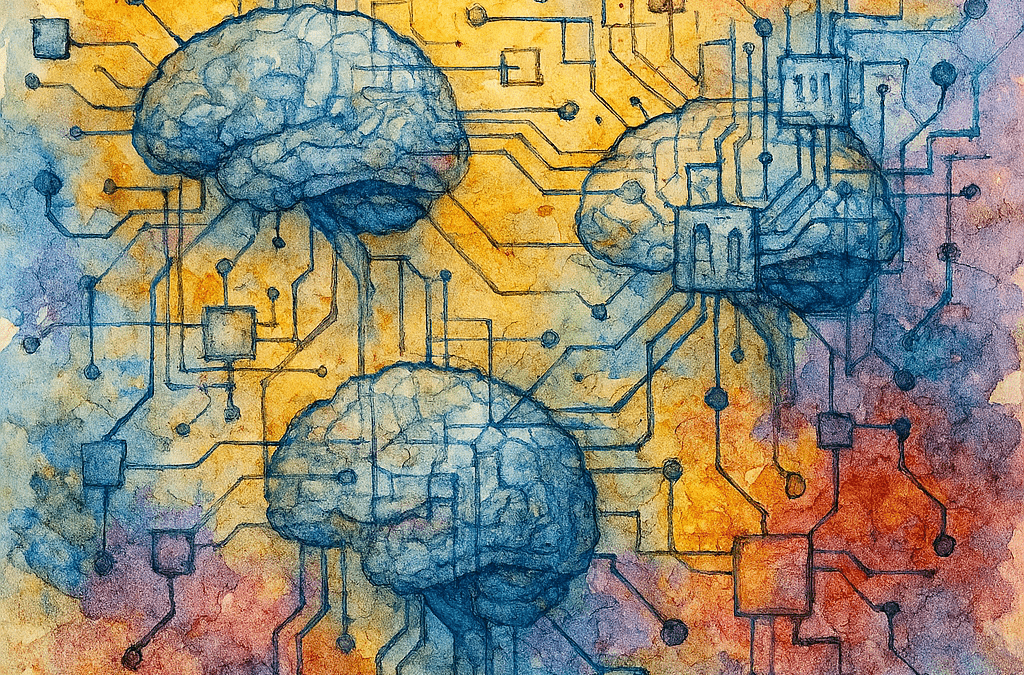
Dear CEO – Beyond the AI Grid – Reimagining Value Propositions in the Knowledge Era

Dear CEO – Beyond the AI Grid – Reimagining Value Propositions in the Knowledge Era

We’re all focused on building the AI grid, but the real opportunity lies in what we build on it.

Just as electricity unlocked a wave of transformative products such as toasters, washing machines – by automating tedious tasks, the AI grid is poised to do the same for the knowledge era.

But this isn't just about automating existing workflows; it’s about fundamentally rethinking our value propositions.

We need to identify the slow, repetitive, and mundane knowledge tasks that consume our teams' time and attention, and then engineer AI-powered solutions that eliminate them.

This shift demands a strategic re-evaluation of how we create value by moving beyond incremental improvements to envision entirely new services and product offerings built on the foundation of automated expertise.

Just as the industrial revolution was defined by the elimination of manual labor, the digital era, powered by AI, will be defined by the elimination of slow, repetitive, and mundane knowledge labour.

Are you challenging your teams to identify these knowledge bottlenecks and architect solutions that truly redefine your business’s core value?

Let’s discuss how your organization is reimagining its value proposition for the AI-powered future.

#AIStrategy #ValueProposition #DigitalTransformation #KnowledgeWork #Innovation #FutureofWork #DearCEO #CEO
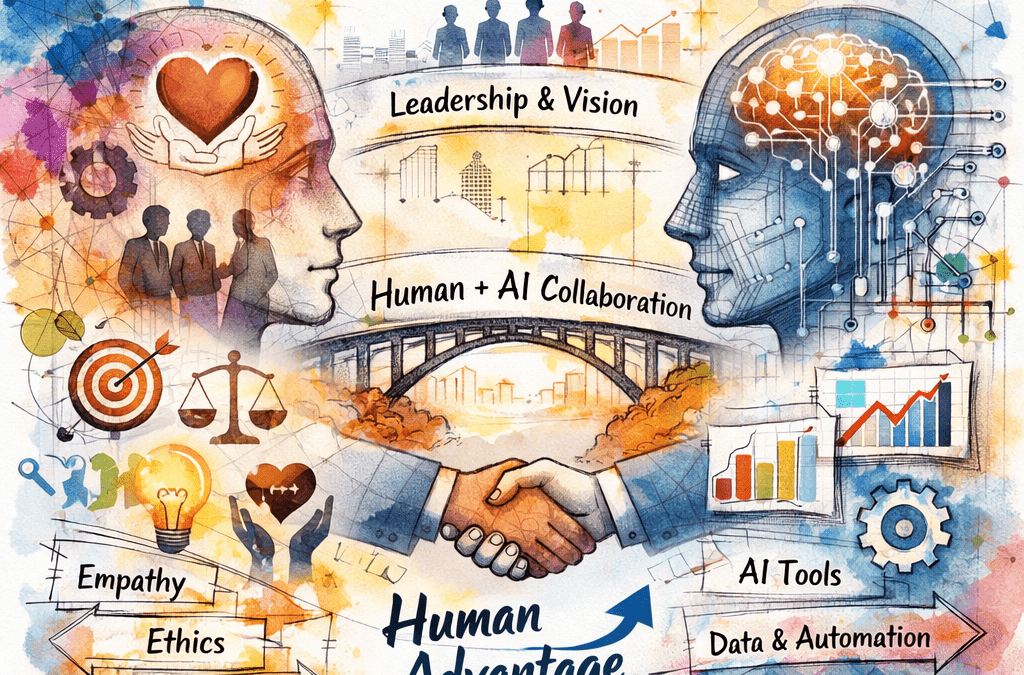

Dear CEO – Stop Building AI Workflows – Start Engineering Human Advantage

Dear CEO – Stop Building AI Workflows – Start Engineering Human Advantage

Are you optimizing your processes, or are you optimizing your people?

This is the single most critical question facing every executive leading an organization today.

The narrative around AI often centers on the technology itself—the models, the data pipelines, the speed.

But the true competitive moat no longer resides in the tech stack; it resides in the humanity of your leadership.

Your primary role as an executive is shifting from being the chief operator to the chief architect of human capability.

The most valuable asset AI augments is not the ledger, but the empathy, the ethical judgment, and the visionary thinking of your team.

Leaders must now champion a culture of courageous experimentation, treating AI as an amplifier for human genius, not a replacement for it.

True digital transformation means solving complex problems that require nuance—the things machines cannot yet feel.

This pivot demands that leadership must go first, demonstrating the emotional engagement and commitment to change.

Focus your efforts on defining the "why" and the "how" of human-machine collaboration.

Action Plan for Executives, to operationalize the insights above, executives should implement the following three-pronged plan:

Conduct a "Humanity Audit"
Identify the top three business processes that require deep empathy, ethical judgment, or complex negotiation (areas AI struggles with). These become your immediate focus areas for strategic investment.

Institute "AI-Augmented Empathy Workshops"
Rather than running AI workshops, run workshops designed to teach teams how to pair AI outputs with deep human insight. This forces cross-functional thinking.

Mandate Leadership Modeling
The executive team must publicly and visibly lead the adoption of new AI tools in their own daily workflows. This sets the cultural tone and signals that transformation is non-negotiable.

What is the one non-technical skill your organization must amplify to survive the next wave of AI disruption?

Dear CEO – The EU ‑ Canada Digital Trade Pact Is the New Rule Maker for AI

Dear CEO – The EU ‑ Canada Digital Trade Pact Is the New Rule Maker for AI

The EU and Canada have just signed a dedicated digital trade agreement that will cement European standards for AI governance, GDP aligned data flows, cybersecurity, and digital identity as the baseline for a $20 trillion trans‑Atlantic market of 500 million consumers.

For senior leaders this means regulatory compliance is becoming a strategic moat.

Companies that build their products and services to EU‑Canada rules today will enjoy lower long‑term costs than those juggling separate playbooks.

Executives must therefore re‑engineer product pipelines, data architectures, and risk frameworks around the EU AI Act and GDPR‑style provisions or risk losing market relevance.

Action Plan for Executives
1. Audit & Gap Analysis (0–30 days)
Map current AI, data‑privacy, and cybersecurity controls against the EU AI Act and GDPR; identify compliance gaps.

2. Cross‑Functional Task Force (30–60 days)
Assemble legal, product, engineering, and risk leads to design a unified “EU‑Canada compliant” architecture.

3. Pilot Redesign (60–120 days)
Select one flagship AI product or data‑intensive service; rebuild it to meet EU standards and measure cost/benefit versus maintaining dual regimes.

4. Governance Framework (120–180 days)
Institutionalize a “Regulatory First” mindset: embed compliance checkpoints in the product development lifecycle and create a board‑level oversight committee.

Will your organization choose to be a rule‑taker in the markets you dominate, or will you pre‑emptively adopt the emerging European standards as a global operating model?

#DigitalTransformation #AIRegulation #DataGovernance #StrategicLeadership #Geopolitics #FutureOfWork #CEO #DearCEO